Understanding the Unprecedented Silver Market Crash of January 2026
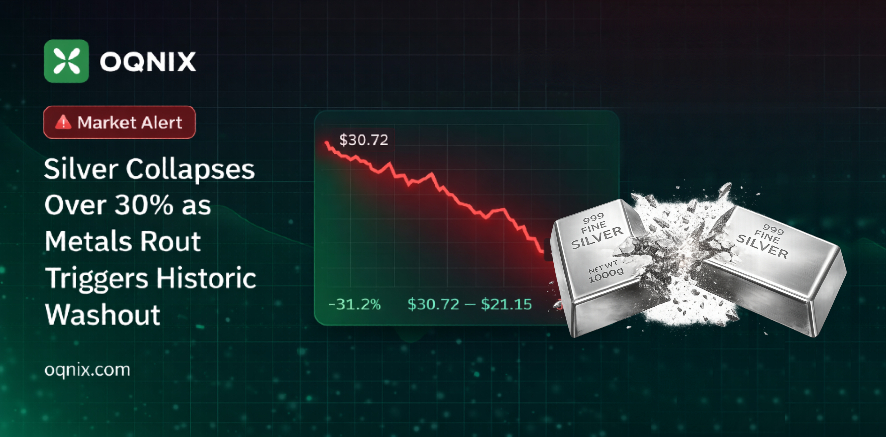
Silver prices experienced a catastrophic decline of over 30% on January 30, 2026, marking one of the most severe single-day collapses in precious metals history and sending shockwaves through global financial markets, including Forex Trading in UAE and metals trading in Dubai. The grey metal plummeted from its record high of $118.46 to trade at $76.91, erasing more than $38 in value within hours and triggering massive margin calls across international trading platforms.
The silver market collapse represents the worst daily performance since March 1980, when similar speculative excesses led to a dramatic washout. Traders engaged in Forex Trading in UAE witnessed unprecedented volatility as the precious metals rout rippled through currency pairs, commodity trading, indices trading, and related financial instruments. Metals trading in Dubai, a major global hub for precious metals commerce, experienced intense selling pressure as investors scrambled to liquidate positions and meet margin requirements.
Market Dynamics Behind the Silver Price Collapse
The dramatic reversal in silver prices stemmed from multiple converging factors that created a perfect storm for precious metals traders. Silver futures contracts plummeted 31.4% to settle at $78.53, marking the steepest decline in over four decades and catching many market participants off guard, particularly those engaged in leveraged forex trading and commodities speculation.
Technical Breakdown and Support Level Failures
Silver’s technical structure collapsed rapidly as key psychological and technical support levels disintegrated. The precious metal broke decisively below $100, $90, and $80 within rapid succession, triggering algorithmic selling and stop-loss orders that accelerated the downward momentum. The Relative Strength Index (RSI) experienced a parabolic decline from approximately 83 to 42, signaling an extreme shift from overbought conditions to bearish territory.
The 50-day Simple Moving Average at $73.51 emerged as critical support, preventing silver from testing the psychologically important $70.00 threshold during the initial washout. Market analysts tracking Forex Trading in UAE platforms noted that the violent price action reflected forced liquidations rather than orderly profit-taking, suggesting severe stress in derivative markets and margin financing structures.
Federal Reserve Leadership Transition Impact
President Donald Trump’s nomination of Kevin Warsh as the next Federal Reserve Chairman served as the primary catalyst for the metals rout. Warsh represents a hawkish monetary policy stance, with markets interpreting his potential appointment as signaling the end of accommodative monetary conditions and potentially higher-for-longer interest rates. The announcement triggered an immediate reassessment of dollar weakness narratives that had propelled precious metals to record highs.
The US Dollar Index surged approximately 0.8% higher following the Warsh nomination news, making dollar-denominated commodities more expensive for international buyers and undermining the thesis that precious metals would replace the greenback as the globe’s reserve currency. Forex trading participants witnessed dramatic movements in major currency pairs, with the strengthening dollar pressuring commodity-linked currencies and emerging market exchange rates.
Implications for Metals Trading in Dubai and Regional Markets
Metals trading in Dubai experienced significant disruption as the silver collapse coincided with active trading hours in the Middle East. Dubai’s position as a strategic precious metals trading hub meant that regional investors faced immediate exposure to the volatility, particularly those holding leveraged positions in silver futures, options, or exchange-traded products.
Regional Trading Platform Response
Major Forex brokers operating in the UAE implemented emergency measures to manage the unprecedented volatility. Margin requirements increased substantially across precious metals products, forcing traders to deposit additional collateral or face automatic position liquidation. Several Forex trading platforms experienced technical strain as order volumes surged and price discovery mechanisms struggled to function normally during the most volatile trading periods.
The collapse highlighted the interconnected nature of global commodity markets and the rapid transmission of price shocks across time zones and trading venues. Forex Trading in UAE participants learned valuable lessons about position sizing, leverage management, and the importance of maintaining adequate margin buffers during periods of extreme market stress.
Physical vs. Paper Market Divergence
The washout revealed a growing disconnect between physical bullion markets and paper derivative pricing mechanisms. Physical silver premiums at major dealers remained elevated even as futures prices plummeted, indicating that long-term holders refused to liquidate their physical metal holdings despite the severe paper market dislocation. The divergence suggests underlying supply constraints persist despite the dramatic price correction.
Traders specializing in metals trading in Dubai observed that spot physical markets demonstrated more resilience than futures contracts, reflecting regional demand dynamics and the preference for tangible asset ownership in Middle Eastern markets. The premium structure indicated that while speculative positioning unwound violently, fundamental supply-demand imbalances remained intact.
Trading Opportunities for Forex Brokers and Market Participants
The silver market washout created both risks and opportunities for sophisticated traders utilizing Forex broker platforms in the UAE and broader Middle East region. Volatility expansion across precious metals and related currency pairs offered potential profit opportunities for those with disciplined risk management frameworks and adequate capital reserves.
Strategic Considerations for Forex Trading
Forex trading strategies incorporating precious metals exposure required immediate recalibration following the collapse. Correlation patterns between silver, gold, and major currency pairs experienced temporary disruption, creating potential arbitrage opportunities for quantitative trading systems and discretionary traders with deep market knowledge.
The strengthening dollar dynamic suggested potential trading opportunities in dollar-denominated commodity pairs, particularly those with significant precious metals sensitivity. Forex Trading in UAE participants positioned for continued dollar strength could capitalize on the shifting macro narrative, particularly if the Warsh nomination solidified expectations for tighter monetary policy.
Risk Management Lessons
The silver washout underscored critical risk management principles for traders operating in leveraged markets. Position sizing relative to account equity emerged as paramount, with traders holding oversized silver exposures facing catastrophic losses or complete account liquidation. The episode demonstrated that even historically stable assets can experience extreme volatility when market structure becomes fragile.
Forex brokers serving UAE clients enhanced their risk management protocols, implementing stricter position limits, reduced maximum leverage ratios for precious metals products, and enhanced margin monitoring systems. The changes aimed to prevent excessive speculation while maintaining market access for professional traders with appropriate risk controls.
Market Outlook and Technical Analysis for Silver Recovery
The technical damage from the 30%+ collapse presents significant challenges for silver bulls attempting to establish a sustainable recovery trajectory. Key resistance levels now exist at $83.75, the December 29 high that previously served as support before the breakdown. Silver closing above this threshold on a daily basis represents the minimum requirement for reestablishing bullish momentum.
Critical Support and Resistance Zones
Technical analysts tracking metals trading in Dubai identified multiple support zones that silver must defend to prevent deeper retracement. The $70.00 psychological level represents the first major support, backed by the 50-day Simple Moving Average at $73.51. Failure to hold this zone could trigger another wave of selling toward the 100-day SMA at $60.00, representing an additional 20%+ decline from current trading levels.
Resistance levels cluster between $83.75 and $100.00, with the psychological $100 barrier representing a formidable obstacle for any recovery attempt. Traders engaged in Forex trading must monitor these technical levels closely, as breakouts or breakdowns typically generate momentum that extends beyond initial price objectives.
Fundamental Factors Supporting Potential Rebound
Despite the severe technical damage, several fundamental factors support the case for eventual silver price recovery. Industrial demand remains robust, particularly from solar panel manufacturing, electronics production, and emerging electrification technologies that require substantial silver content. Structural supply deficits persist, with analysts projecting that consumption exceeds mine production by significant margins.
Central bank precious metals accumulation continues, with major economies diversifying reserves away from dollar-denominated assets and toward tangible commodities. Geopolitical tensions remain elevated, providing ongoing safe-haven demand that traditionally benefits precious metals during periods of uncertainty. These factors suggest the washout may represent a violent correction within an ongoing secular bull market rather than a definitive trend reversal.
Global Economic Context and Precious Metals Performance
The broader macroeconomic environment remains supportive of precious metals despite the severe January 30 correction. Gold prices declined approximately 9% to trade near $4,895.22 per ounce, demonstrating that the washout affected the entire precious metals complex rather than just silver. The synchronized selling pressure reflected wholesale deleveraging across commodity positions rather than metal-specific fundamental deterioration.
Retail Speculation and Market Structure
The silver market entered 2026 in severely overbought territory following a parabolic advance that saw prices surge $20 in just 48 hours to touch $120 per ounce. Retail trader participation reached extreme levels, with the call-to-put ratio on the iShares Silver Trust (SLV) hitting an unsustainable 4.2-to-1, indicating excessive bullish positioning and limited hedging activity.
The concentration of speculative positioning created fragile market structure vulnerable to rapid unwinding once the Warsh nomination triggered initial selling. Automated stop-loss orders cascaded through the market, transforming orderly profit-taking into a full-scale rout as margin calls forced leveraged traders to liquidate positions regardless of price levels.
Comparison to Historical Precious Metals Crashes
The January 30, 2026 silver washout bears striking resemblance to previous precious metals crashes, particularly the 1980 silver collapse and the 2011 gold “double top” reversal. Each historical instance involved parabolic price advances driven by retail speculation and inflation fears that eventually collapsed under momentum exhaustion and shifting monetary policy expectations.
The current $111 trillion global debt load provides long-term structural support for precious metals as inflation hedges and currency debasement protection. The violent correction suggests the market’s “fear gauge” reached temporary limits rather than invalidating the fundamental case for metals ownership.
Trading Strategies for Forex Brokers During Volatile Markets
Forex brokers operating in the UAE and broader Middle East region faced unprecedented challenges managing client exposures and platform stability during the silver washout. The episode highlighted the importance of robust technology infrastructure, comprehensive risk management systems, and clear client communication protocols during periods of extreme market stress.
Platform Infrastructure and Execution Quality
Trading platform performance becomes critical during high-volatility events when order flows surge and price discovery mechanisms face stress. Forex Trading in UAE clients expect reliable order execution, transparent pricing, and sufficient liquidity even during extreme market conditions. Forex brokers that maintained operational excellence during the washout strengthened client relationships and competitive positioning.
Execution quality metrics including slippage, requotes, and order rejection rates experienced deterioration across the industry as liquidity providers widened spreads and reduced maximum order sizes. Top-tier Forex brokers with diversified liquidity relationships and advanced execution algorithms minimized negative client impact compared to platforms relying on single liquidity sources.
Client Education and Communication
The silver collapse demonstrated the importance of comprehensive client education regarding leverage risks, position sizing principles, and the potential for extreme volatility in commodity markets. Forex brokers with proactive educational programs helped clients understand market dynamics and make informed decisions rather than panic during the washout.
Communication strategies during the crisis included real-time market updates, analysis of driving factors behind the collapse, and technical support for clients experiencing platform issues or margin-related questions. Forex Trading in UAE participants valued transparent, timely communication that enabled them to assess their positions and make rational decisions under pressure.
Conclusion: Navigating Precious Metals Volatility in UAE Markets
The historic silver washout of January 30, 2026 serves as a powerful reminder that extreme volatility remains inherent in commodity markets regardless of fundamental bullish narratives or extended price advances. Traders engaged in Forex Trading in UAE and metals trading in Dubai learned valuable lessons about leverage, position sizing, technical analysis, and the importance of disciplined risk management.
The collapse erased months of gains within hours, punishing overleveraged speculators while creating potential opportunities for disciplined traders with appropriate risk controls. Forex brokers demonstrated their operational resilience and commitment to client service during the crisis, differentiating premium platforms from those lacking adequate infrastructure and risk management capabilities.
Looking forward, silver technical structure remains damaged, requiring sustained closes above resistance levels to reestablish bullish momentum. Fundamental factors including industrial demand growth, structural supply deficits, and ongoing geopolitical tensions provide long-term support for precious metals despite the severe correction. Forex trading participants must balance these competing dynamics while maintaining strict risk discipline and appropriate position sizing.
The metals trading in Dubai community emerged from the washout with enhanced awareness of market structure vulnerabilities, the dangers of crowded positioning, and the critical importance of maintaining adequate margin buffers during volatile periods. These lessons apply broadly across asset classes and trading strategies, reinforcing timeless principles of risk management and disciplined speculation.
For traders utilizing Forex broker platforms in the UAE, the silver collapse underscores the necessity of comprehensive market analysis, diversified trading strategies, and unwavering commitment to risk management protocols. Those who internalize these lessons position themselves for long-term trading success across precious metals, currencies, and broader financial markets.
About oqnix.com: We provide comprehensive Forex trading solutions and metals trading services for clients across the UAE and Middle East region, combining advanced technology platforms with professional market analysis and risk management expertise.